Keeping the Arun Protected: Cappagh Browne Delivers 690m Rising Main Replacement in Arundel
Category: Case Studies News
Introduction
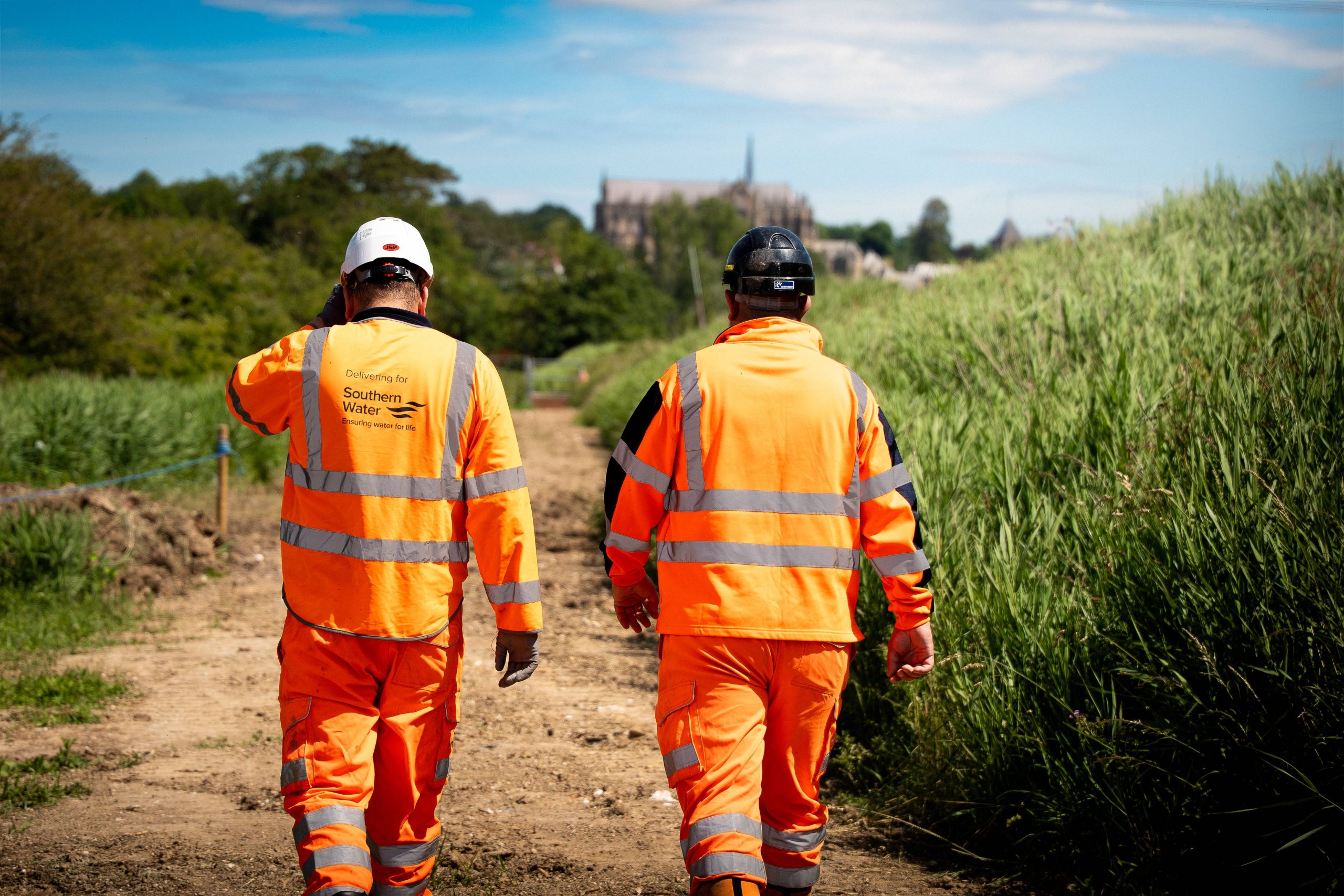
That was the task facing Cappagh Browne in Arundel, where an ageing 250mm rising main had suffered multiple bursts within a short period. With a stream on one side and the River Arun on the other, each failure carried a clear environmental risk. Southern Water made the decision to replace the full section, turning a reactive repair issue into a planned resilience upgrade.
The original scope covered approximately 600 metres of rising main from outside the pumping station to the point where the pipe turns towards the river. During the programme, a further burst inside the site meant the works were extended by an additional 90 metres, taking the final replacement length to 690 metres.
A stronger long-term solution
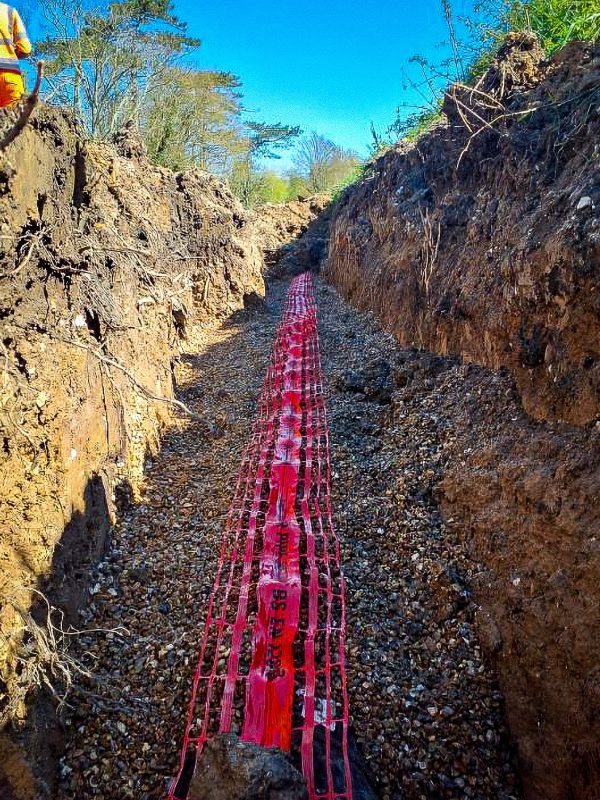
The new main was installed like-for-like in terms of size, but with a stronger modern specification. Cappagh Browne replaced the old 250mm cast pipe, previously connected with traditional Viking Johnson joints, with SDR16 plastic pipe and electrofusion couplings.
These couplings use heat to fuse each pipe section together, creating a strong, secure joint and reducing the risk of future leakage. The works were delivered in 12 metre sections, with each section excavated, installed and backfilled before moving on to the next. This approach reduced the amount of open excavation at any one time and allowed the team to progress safely along the route while maintaining control of the working area.
Keeping the network running
One of the most important decisions on the project was how to keep the main operational while the old pipe was taken out of service. Rather than relying heavily on tankering, Cappagh Browne designed and installed a temporary overland rising main. This allowed flows to be diverted above ground while the permanent replacement was installed below ground.
The result was a more efficient and environmentally considerate solution, reducing vehicle movements, limiting disruption and removing significant tankering costs from the programme.
Managing a sensitive riverside site
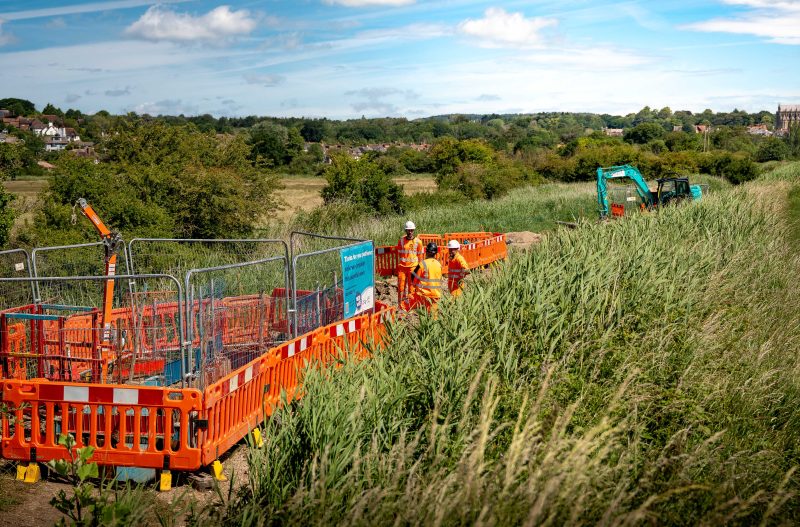
The site presented a number of additional constraints, requiring careful planning and close coordination throughout. Key considerations included:
- Working alongside a stream, the River Arun and nearby flood defence infrastructure
- Managing Flood Risk Activity Permit requirements for excavation near the flood defence
- Using pipe bursting technology where open cut excavation was not permitted
- Coordinating arborist advice, tree works and landowner permissions
- Responding to further bursts and changing site conditions while keeping the programme moving
In one area, where digging was not permitted, the team used pipe bursting technology. This involved pulling a bursting head through the existing pipe to split it while drawing the new pipe into place behind it, avoiding the need for open cut excavation across that section.
The team also had to respond to changing site conditions. Additional bursts, winter weather, land access requirements and tree constraints all affected the programme. Where trees presented a safety risk and restricted access to the burst location, Cappagh Browne brought in an arborist to assess the area, checked for protected tree constraints and secured the necessary landowner permissions before works continued.
The outcome
Despite the challenges, the new rising main has now been connected, pressure tested and brought into service. The finished scheme provides Southern Water with a stronger, more resilient asset in a sensitive location, reducing the likelihood of repeat bursts and helping protect the nearby watercourse and River Arun.
For Cappagh Browne, the project demonstrates the value of practical planning, responsive delivery and experienced site decision-making. The replacement itself may have been straightforward on paper, but the success of the scheme came from everything around it: maintaining service, managing environmental risk, adapting to live issues and delivering a robust long-term solution in a challenging riverside setting.
Category: Case Studies News
Location: Sussex